|
1 Before you read, use your dictionary to find the meaning of these words. Then write the words, a translation and an example sentence in your vocabulary books.
|
- Write your task in another program (e.g. Word).
- Save the file to your computer.
- Upload your file.
- If you want to add a note to your teacher, write it in the Comments box.
- Select Submit to Dropbox to send your work to your teacher.
AOperations were very basic and dangerous.
BWe can use some ideas from the past.
CDoctors weren't interested in doing operations.
DA few treatments were sensible.
EMedieval medicine was dangerous and didn't often work.
FDoctors wore special clothes.
1
2
3
4
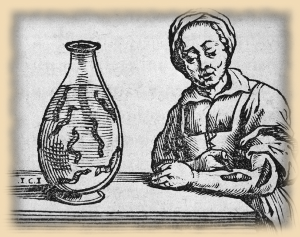
Small creatures called leeches were put on people's skin to take out 'bad' blood.

 Medical knowledge in Europe in medieval times (476–1453) was very limited. There were doctors in medieval times, although they were usually only for rich people and they weren't very good. Most people couldn't pay a doctor's fees. For poor people, there was the wise woman. These women could make medicines from plants and animals! Most medicines were useless and some were so dangerous that people could die. Here are some doctors and wise women's treatments:
•For general illness: Make cuts on your body, or put a leech on your skin, so that the 'bad' blood comes out.
•Toothache: Burn a candle near the bad tooth, or touch a dead man's tooth.
•Fever: Eat spiders.
•Skin problems: Put wolf skin on the bad areas.
 Operations were horrific. There were no painkillers. Death was common – there were often infections, because there were no antibiotics. There were no special doctors to do these tasks. Instead barbers and blacksmiths could do operations, because they could use their knives and tools. So the blacksmith's or the barber's was the place to go with a bad tooth, or worse ...
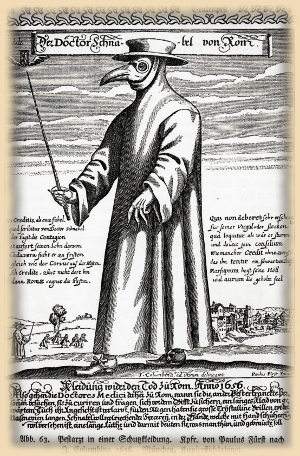
A plague doctor. There were flowers and herbs inside the mask to protect the doctor from bad smells.
 But not all medieval medicine was dangerous. Most of these treatments for plague are nonsense, but some aren't bad – going to bed and keeping clean, for example, seem sensible!
•Go to bed.
•Wash the body with vinegar.
•Cut open the swellings.
•Don't eat food that smells bad, such as fish, meat or cheese. Eat
bread, fruit and vegetables.
•Clean the road outside the ill person's house.
 Modern medicine is obviously very different, but there are connections to the past. Today scientists study plants that can help us when we are ill. Some of those plants were favourites in medieval times. And, some modern treatments even use leeches. They are especially helpful after certain operations. However, perhaps that's the most we can learn from medieval medicine. Anyone fancy
a spider sandwich? Maybe not!
1Doctors were , so a lot of people couldn't go to them.
2If someone wasn't well, they could put on their skin.
3People often died after operations because there weren't any .
4There were some bad ideas for treating plague, such as and .
5Doctors today sometimes use ideas from medieval times, such as leeches and .
Small creatures called leeches were put on people's skin to take out 'bad' blood.
Medical knowledge in Europe in medieval times (476–1453) was very limited. There were doctors in medieval times, although they were usually only for rich people and they weren't very good. Most people couldn't pay a doctor's fees. For poor people, there was the wise woman. These women could make medicines from plants and animals! Most medicines were useless and some were so dangerous that people could die. Here are some doctors and wise women's treatments:
•For general illness: Make cuts on your body, or put a leech on your skin, so that the 'bad' blood comes out.
•Toothache: Burn a candle near the bad tooth, or touch a dead man's tooth.
•Fever: Eat spiders.
•Skin problems: Put wolf skin on the bad areas.
Operations were horrific. There were no painkillers. Death was common – there were often infections, because there were no antibiotics. There were no special doctors to do these tasks. Instead barbers and blacksmiths could do operations, because they could use their knives and tools. So the blacksmith's or the barber's was the place to go with a bad tooth, or worse ...
A plague doctor. There were flowers and herbs inside the mask to protect the doctor from bad smells.
But not all medieval medicine was dangerous. Most of these treatments for plague are nonsense, but some aren't bad – going to bed and keeping clean, for example, seem sensible!
•Go to bed.
•Wash the body with vinegar.
•Cut open the swellings.
•Don't eat food that smells bad, such as fish, meat or cheese. Eat
bread, fruit and vegetables.
•Clean the road outside the ill person's house.
Modern medicine is obviously very different, but there are connections to the past. Today scientists study plants that can help us when we are ill. Some of those plants were favourites in medieval times. And, some modern treatments even use leeches. They are especially helpful after certain operations. However, perhaps that's the most we can learn from medieval medicine. Anyone fancy
a spider sandwich? Maybe not!
4Match the highlighted words in the text to definitions 1–10.
Small creatures called leeches were put on people's skin to take out 'bad' blood.
Medical knowledge in Europe in medieval times (476–1453) was very limited. There were doctors in medieval times, although they were usually only for rich people and they weren't very good. Most people couldn't pay a doctor's fees. For poor people, there was the wise woman. These women could make medicines from plants and animals! Most medicines were useless and some were so dangerous that people could die. Here are some doctors and wise women's treatments:
•For general illness: Make cuts on your body, or put a leech on your skin, so that the 'bad' blood comes out.
•Toothache: Burn a candle near the bad tooth, or touch a dead man's tooth.
•Fever: Eat spiders.
•Skin problems: Put wolf skin on the bad areas.
Operations were horrific. There were no painkillers. Death was common – there were often infections, because there were no antibiotics. There were no special doctors to do these tasks. Instead barbers and blacksmiths could do operations, because they could use their knives and tools. So the blacksmith's or the barber's was the place to go with a bad tooth, or worse ...
A plague doctor. There were flowers and herbs inside the mask to protect the doctor from bad smells.
But not all medieval medicine was dangerous. Most of these treatments for plague are nonsense, but some aren't bad – going to bed and keeping clean, for example, seem sensible!
•Go to bed.
•Wash the body with vinegar.
•Cut open the swellings.
•Don't eat food that smells bad, such as fish, meat or cheese. Eat
bread, fruit and vegetables.
•Clean the road outside the ill person's house.
Modern medicine is obviously very different, but there are connections to the past. Today scientists study plants that can help us when we are ill. Some of those plants were favourites in medieval times. And, some modern treatments even use leeches. They are especially helpful after certain operations. However, perhaps that's the most we can learn from medieval medicine. Anyone fancy
a spider sandwich? Maybe not!
1(adjective) terrible, awful
2(noun) links
3(adjective) not good, with no use
4(adjective) without many options
5(noun) jobs
6(adjective) normal
7(noun) amount of money
8(verb) like or want
9(noun) issues
10(adjective) silly, ridiculous, stupid
- MOVE
- limited
- fees
- useless
- problems
- horrific
- common
- tasks
- connections
- fancy
1'I can't play football today because it's cold.' 'That's
- nonsense ! You should put a jumper on and then you can play.'
2I need to pay for my music lessons. They're expensive – the are very high.
3Do you going swimming this afternoon?
4The activities at the sports centre were – there was only tennis and aerobics.
5I can't sing or play a musical instrument. I'm at music.
6My uncle is a film director. He's got with a lot of famous people.
7A lot of people have a cold in winter. Colds are very .
8The people on the first boat from England to America were very ill. For them, the journey was .
6 Study the information in the table about Islamic medicine in medieval times. Complete the table with information from the text about European medicine in medieval times. Then write sentences comparing the two.

- Write your task in another program (e.g. Word).
- Save the file to your computer.
- Upload your file.
- If you want to add a note to your teacher, write it in the Comments box.
- Select Submit to Dropbox to send your work to your teacher.
No comments:
Post a Comment