BEFORE YOU READ
1Read about Charles Dickens and his experience as a child. What do you think this story might be about?
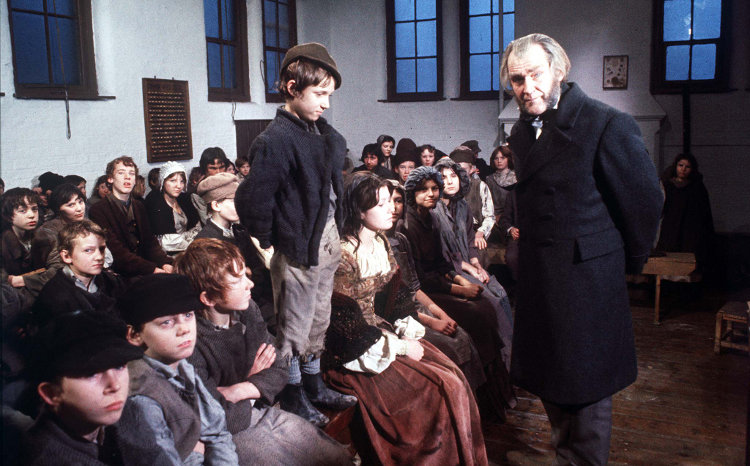
2Look at the photo. What do you think schools were like in the nineteenth century?
About the author
Charles Dickens
Born: 1812 in Portsmouth, England
Died: 1870
Important works: Oliver Twist (1837−39), Nicholas Nickleby (1838−39), A Christmas Carol (1843), David Copperfield (1849−50), Hard Times (1854), Great Expectations (1860−61)
Did you know? Dickens is one of the greatest English novelists. He wrote about the social conditions of nineteenth-century England. Life was difficult then and many people, including children, worked long hours and earned very little. When Dickens was twelve years old, his father went to prison because he borrowed too much money. Dickens had to go and work in a factory, so he didn't go to school for several years. He became rich and famous later in life, but this experience influenced his stories.
Like many novels in the nineteenth century, Dickens' works first appeared as serialized stories in newspapers and magazines. The topics and the memorable characters, such as Mr Pickwick and Scrooge, made the stories extremely popular. At that time, many people were illiterate, so they went to coffee shops to hear the stories read aloud.
BACKGROUND TO THE STORY
Hard Times is set in a fictional industrial town, called Coketown, somewhere in the north of England in the mid-1800s. The town is dirty and noisy, and the life of the people working in the factories is hard. Mr Gradgrind, who is the local MP, represents the people of Coketown in Parliament. He has set up a school in the town and is very proud of its work. Mr Gradgrind also works with Mr Bounderby, a rich banker and factory owner.
Sissy Jupe's father is .
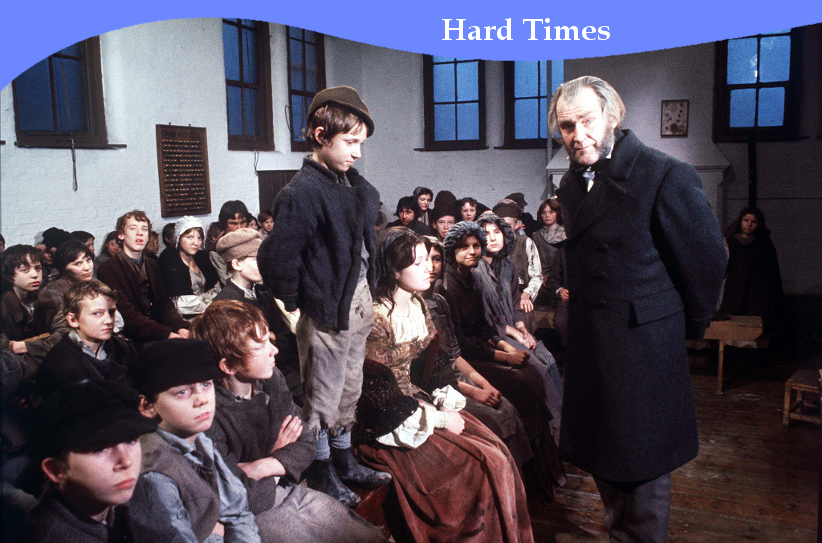
'Now what I want is facts. Give these boys and girls facts. That's how I teach my own children, and that's how I want you to teach these children here in my school. Facts, Sir, only facts!'
These words were spoken in a large, clean schoolroom with high, white, empty walls. The speaker was Mr Thomas Gradgrind, a Member of Parliament, a man of facts, numbers, and information. He had a square body, a square face, and a loud voice. He stood beside the schoolteacher and looked at the children, sitting in rows like empty bottles, all waiting for somebody to fill them up with facts.
'Girl number twenty,' he said, looking at a darkeyed girl in the front row. 'Who is that girl?'
'Sissy Jupe, Sir,' said girl number twenty, in a shaking voice.
'Sissy is not a name. Call yourself Cecilia.'
'My father calls me Sissy, Sir,' she replied quietly, her face reddening.
'Then tell him that he mustn't. What is your father?'
'He's a clown in the circus, Sir. The horse-riding circus.'
'We don't want to talk about circuses here,' said Gradgrind in a stern voice. 'Let me ask you, boys and girls, would you like to have paper on your walls, with pictures of horses on it?'
Half of the children called 'Yes, Sir!' Then the other half, seeing Mr Gradgrind's stony face, shouted 'No, Sir!'
'Of course, no,' said Mr Gradgrind. 'Do you ever, in fact, see real horses walking up and down the sides of rooms? Of course not! And would you like to have a carpet with pictures of flowers on it in your house? Girl number twenty!'
'Yes, Sir,' answered Sissy Jupe, reddening more deeply. 'I like flowers. They're pleasant and pretty. My idea is –'
'Ah! That's the problem!' said Mr Gradgrind. 'Ideas! Never have ideas, Cecilia Jupe. Never. Now then, who can tell me what you must have? Bitzer, can you?'
He looked at a boy with very light skin, white hair, and cold, almost colourless eyes.
'Facts, Sir,' replied the boy.
'Very good, Bitzer. You must not have anything which you cannot, in fact, see in the real world – no horses on your walls, no flowers on your floors. Facts, only facts!'
Mr Gradgrind ordered the schoolteacher to begin his lesson, and then he left for home.
From Hard Times, Oxford Dominoes. Text adaptation by Susan Kingsley.
'Now what I want is facts. Give these boys and girls facts. That's how I teach my own children, and that's how I want you to teach these children here in my school. Facts, Sir, only facts!'
These words were spoken in a large, clean schoolroom with high, white, empty walls. The speaker was Mr Thomas Gradgrind, a Member of Parliament, a man of facts, numbers, and information. He had a square body, a square face, and a loud voice. He stood beside the schoolteacher and looked at the children, sitting in rows like empty bottles, all waiting for somebody to fill them up with facts.
'Girl number twenty,' he said, looking at a darkeyed girl in the front row. 'Who is that girl?'
'Sissy Jupe, Sir,' said girl number twenty, in a shaking voice.
'Sissy is not a name. Call yourself Cecilia.'
'My father calls me Sissy, Sir,' she replied quietly, her face reddening.
'Then tell him that he mustn't. What is your father?'
'He's a clown in the circus, Sir. The horse-riding circus.'
'We don't want to talk about circuses here,' said Gradgrind in a stern voice. 'Let me ask you, boys and girls, would you like to have paper on your walls, with pictures of horses on it?'
Half of the children called 'Yes, Sir!' Then the other half, seeing Mr Gradgrind's stony face, shouted 'No, Sir!'
'Of course, no,' said Mr Gradgrind. 'Do you ever, in fact, see real horses walking up and down the sides of rooms? Of course not! And would you like to have a carpet with pictures of flowers on it in your house? Girl number twenty!'
'Yes, Sir,' answered Sissy Jupe, reddening more deeply. 'I like flowers. They're pleasant and pretty. My idea is –'
'Ah! That's the problem!' said Mr Gradgrind. 'Ideas! Never have ideas, Cecilia Jupe. Never. Now then, who can tell me what you must have? Bitzer, can you?'
He looked at a boy with very light skin, white hair, and cold, almost colourless eyes.
'Facts, Sir,' replied the boy.
'Very good, Bitzer. You must not have anything which you cannot, in fact, see in the real world – no horses on your walls, no flowers on your floors. Facts, only facts!'
Mr Gradgrind ordered the schoolteacher to begin his lesson, and then he left for home.
From Hard Times, Oxford Dominoes. Text adaptation by Susan Kingsley.
1Mr Gradgrind hasn't got any children.
2He worked as a teacher before he became an MP.
3Sissy Jupe and Mr Gradgrind haven't met before.
4He asks Sissy to tell him more about the circus.
5Sissy agrees with Mr Gradgrind that it's wrong to have patterns on carpets.
6He doesn't want the children in his school to use their imagination.
7Bitzer is Mr Gradgrind's favourite student.
8Mr Gradgrind stays to watch the rest of the lesson.
3 Read the questions and give your opinion.
- Do you agree with Mr Gradgrind that the only thing you need is facts? Are facts and money more important than ideas and feelings? Why / why not?
- Do you think Sissy will be happy at Mr Gradgrind's school? Why / why not?
READ ON
On his way home, Mr Gradgrind passes the circus and discovers Tom and Louisa, two of his five children, watching the performance. Louisa tells him she wondered what it was like. She's tired of a life full of facts. They all go home, where they find Mr Bounderby talking to Mrs Gradgrind.
Mr Bounderby suggests sending Sissy away from the school because he thinks she's a bad influence on the other children. The two men set out to find Sissy's father and tell him about their decision. They meet Sissy on the way. She has bought a medicine called 'Nine Oils' for her father because he's ill. They go to the house together, but Sissy's father isn't at home. She's worried and goes out to look for him. Mr Bounderby and Mr Gradgrind stay in the house and talk to some of the neighbours.
1Sissy's father has disappeared because
2Sissy's father wanted her
3Mr Gradgrind tells Sissy
4If she accepts the offer,
5If her father comes back,
6Mr Sleary thinks that
7 Read the questions and give your opinion.
- Why do you think Mr Grandgrind changed his mind about sending Sissy away from the school?
- Did Sissy make the right choice? Why / why not?
|
No comments:
Post a Comment