1How many people live in the monastery?
2What is the name of the monastery?
3What time does Paneru get up?
4What time does the writer usually get up?
5What is 'dal'?
6When does Paneru have a free day?
7Where do Paneru's parents live?
8How much did the writer pay for the scarf?

Life at a Buddhist monastery
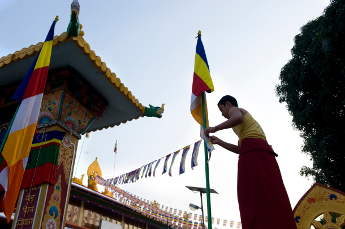
It's 5 a.m. and the bell is ringing to wake up more than 13,000 people living in the Ganden Monastery in Karnataka, India. After three months travelling through India, taking a break here is exactly what I need.
1............................................................................
I'm here to catch up with my friend Paneru.
2............................................................................
When he learned I was in India, he offered to put me up at the monastery for a few days. I'm very interested in how he lives and keen to find out more.
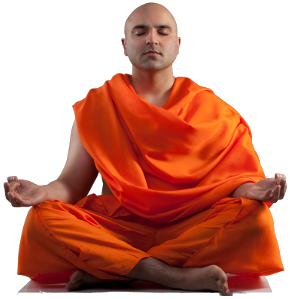
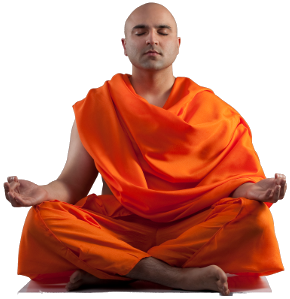
The monks spend their days meditating, studying, working and teaching. Paneru, who is learning to be a monk, always gets up at 5 a.m. for the morning prayer. I feel a bit ashamed of how late I usually get up − my alarm clock goes off at nine. After prayer, Paneru meditates for five hours. He studies all afternoon.
3............................................................................
Quite often, he'll stay up late studying after the evening meal as well.
As a younger monk, Paneru also helps in the kitchen, does the shopping and serves food and tea. The older monks look after the monastery and teach. In the evening, he helps to cook dinner. The food is delicious and really healthy − rice, curry, cabbage and 'dal' (a traditional dish with beans). Paneru has got a free day on Monday when he can go to buy anything he needs in the village.
4............................................................................
Sometimes he works in the gardens, but usually he studies on Monday, too.
I asked Paneru if he ever gets fed up with having so little free time. He told me he feels that all his time is free. He misses his parents in Bhutan, but he says that actually his life is much easier than theirs, and he knows that they're very proud of him.
I'm learning so much while I'm here – how to lead a simple life without mobile phones, credit cards, cars and big shopping centres.
5............................................................................
The monks are happy just helping other people, eating simple food and learning. They don't earn any money, but they care about each other, which is more important.
6............................................................................
When I arrived, Paneru told me to bring his teacher a scarf – the scarf was only two dollars. I thought it was rude to buy such a cheap gift, but Paneru said it didn't matter how much it cost.
I'm sure you are wondering how I'm writing this blog. Well, the monastery isn't totally cut off from the modern world and they're slowly moving towards getting technology.
7............................................................................
So, now I'll log off and enjoy the quiet and calm for another night.
5 comments
Post a comment
AThey only have their clothes and small items important to their religion.
BDaily life in India is exciting and always busy, but life at the monastery is calm and peaceful.
CWe all say we need these things in our busy modern lives, but do we really?
DThis isn't much, maybe some soap or a book, for example.
EI hope they don't move too fast because this peaceful way of life without stress is something you don't find often.
FThe state of Karnataka is famous for its beautiful beaches.
GI met him when I lived in Bhutan with my family as a child.
HThere are regular tests and exams which he must pass.
IThey haven't got a computer yet.
Life at a Buddhist monastery
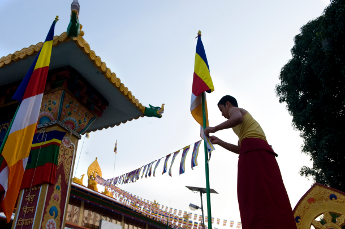
It's 5 a.m. and the bell is ringing to wake up more than 13,000 people living in the Ganden Monastery in Karnataka, India. After three months travelling through India, taking a break here is exactly what I need.
1
I'm here to catch up with my friend Paneru.
2
When he learned I was in India, he offered to put me up at the monastery for a few days. I'm very interested in how he lives and keen to find out more.
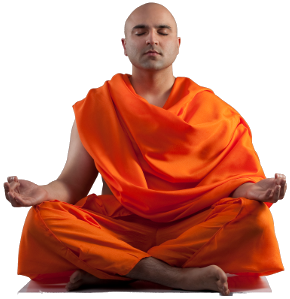
The monks spend their days meditating, studying, working and teaching. Paneru, who is learning to be a monk, always gets up at 5 a.m. for the morning prayer. I feel a bit ashamed of how late I usually get up − my alarm clock goes off at nine. After prayer, Paneru meditates for five hours. He studies all afternoon.
3
Quite often, he'll stay up late studying after the evening meal as well.
As a younger monk, Paneru also helps in the kitchen, does the shopping and serves food and tea. The older monks look after the monastery and teach. In the evening, he helps to cook dinner. The food is delicious and really healthy − rice, curry, cabbage and 'dal' (a traditional dish with beans). Paneru has got a free day on Monday when he can go to buy anything he needs in the village.
4
Sometimes he works in the gardens, but usually he studies on Monday, too.
I asked Paneru if he ever gets fed up with having so little free time. He told me he feels that all his time is free. He misses his parents in Bhutan, but he says that actually his life is much easier than theirs, and he knows that they're very proud of him.
I'm learning so much while I'm here – how to lead a simple life without mobile phones, credit cards, cars and big shopping centres.
5
The monks are happy just helping other people, eating simple food and learning. They don't earn any money, but they care about each other, which is more important.
6
When I arrived, Paneru told me to bring his teacher a scarf – the scarf was only two dollars. I thought it was rude to buy such a cheap gift, but Paneru said it didn't matter how much it cost.
I'm sure you are wondering how I'm writing this blog. Well, the monastery isn't totally cut off from the modern world and they're slowly moving towards getting technology.
7
So, now I'll log off and enjoy the quiet and calm for another night.
5 comments
Post a comment
Life at a Buddhist monastery
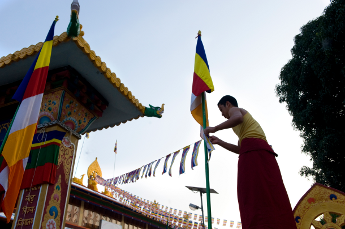
It's 5 a.m. and the bell is ringing to wake up more than 13,000 people living in the Ganden Monastery in Karnataka, India. After three months travelling through India, taking a break here is exactly what I need.
1 ........................................................................................
I'm here to catch up with my friend Paneru.
2 ........................................................................................
When he learned I was in India, he offered to put me up at the monastery for a few days. I'm very interested in how he lives and keen to find out more.
The monks spend their days meditating, studying, working and teaching. Paneru, who is learning to be a monk, always gets up at 5 a.m. for the morning prayer. I feel a bit ashamed of how late I usually get up − my alarm clock goes off at nine. After prayer, Paneru meditates for five hours. He studies all afternoon.
3 ........................................................................................
Quite often, he'll stay up late studying after the evening meal as well.
As a younger monk, Paneru also helps in the kitchen, does the shopping and serves food and tea. The older monks look after the monastery and teach. In the evening, he helps to cook dinner. The food is delicious and really healthy − rice, curry, cabbage and 'dal' (a traditional dish with beans). Paneru has got a free day on Monday when he can go to buy anything he needs in the village.
4 ........................................................................................
Sometimes he works in the gardens, but usually he studies on Monday, too.
I asked Paneru if he ever gets fed up with having so little free time. He told me he feels that all his time is free. He misses his parents in Bhutan, but he says that actually his life is much easier than theirs, and he knows that they're very proud of him.
I'm learning so much while I'm here – how to lead a simple life without mobile phones, credit cards, cars and big shopping centres.
5 ........................................................................................
The monks are happy just helping other people, eating simple food and learning. They don't earn any money, but they care about each other, which is more important.
6 ........................................................................................
When I arrived, Paneru told me to bring his teacher a scarf – the scarf was only two dollars. I thought it was rude to buy such a cheap gift, but Paneru said it didn't matter how much it cost.
I'm sure you are wondering how I'm writing this blog. Well, the monastery isn't totally cut off from the modern world and they're slowly moving towards getting technology.
7 ........................................................................................
So, now I'll log off and enjoy the quiet and calm for another night.
5 comments
Post a comment
- MOVE
- wake up
- catch up with
- put up
- go off
- stay up
- cut off
- log off
1 to separate from; to be unable to communicate with people outside a place
2 to make a loud noise or to ring loudly
3 to stop sleeping
4 to stop using a computer
5 to go to bed very late at night, or later than usual
6 to let someone stay in your house for a short time
7 to learn or discuss the latest news about someone or something
- MOVE
- wake up
- catch up
- put up
- go off
- stay up
- cut off
- log off
To: David Wilson
From: Pashupathi Paneru
Subject: Ganden Monastery
Hi David,
It was great to see you last week and to
1
with you after ten years. I hope we can keep in touch more often. I don't feel completely
2
here, but we don't get visitors very often and it's good to hear about the world outside the monastery.
Thank you so much for your offer to
3
me in your flat in Manhattan. I've never been to New York, but if I ever come to the USA, of course I'll visit you first.
It's 8 a.m. here now, so it must be 9.30 p.m. in New York. I'm tired because I 4 late every night to study. What time did you 5 this morning? You left your alarm clock here and it 6 at nine o'clock every day − I don't know how to stop it.
Tomorrow, I'm going to the village to post a book to you. I think you'll like it – it's got lots of great photos of the area. I'm 7 now – the computer is very popular as you know!
Yours,
Paneru
|
5 Imagine that you are going to put up a friend from another country for a few days, Send them an email describing your daily routine. Think about:
|
- Write your task in another program (e.g. Word).
- Save the file to your computer.
- Upload your file.
- If you want to add a note to your teacher, write it in the Comments box.
- Select Submit to Dropbox to send your work to your teacher.
No comments:
Post a Comment