
the rise of the fur trade
It takes forty dumb animals to make a fur coat …
but only one to wear it.
1990s anti-fur slogan
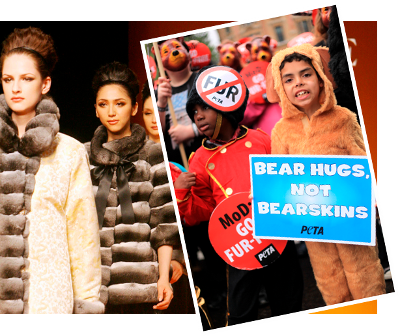
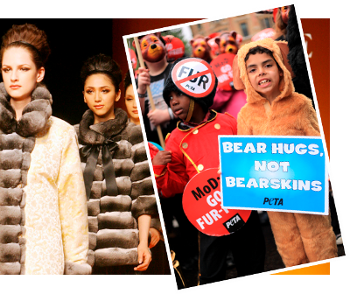
1 In the 1990s, five of the world's most famous supermodels protested against wearing fur. Their campaign was so successful that most fashion-conscious people in Europe gave up their fur boots, coats and hats, and it became embarrassing to put on a fur coat in public. There were programmes on TV about how cruel the trade in animal skins was, and people who continued to wear fur in public were criticized or shouted at in the street.
2 Today, several decades later, the situation has changed. The fur trade is a powerful industry again, and global sales of fur are now worth over eight billion euros a year. In some European capitals, shops that sell products made from animal skins have reported a 50% increase in business. Supermodels have returned to promoting fur on the catwalk, and people in fur coats aren't shouted at in the street any more. It's cool to wear fur again. But why? Is it because the cruelty of the industry has been forgotten?
3 Many groups that campaign against the fur industry are reaching out to a new generation of young people who love fashionable clothes. This generation was too young to be aware of the campaign in the 1990s, and so the anti-fur groups are targeting them with their anti-fur trade message. A spokesperson for the fur industry was interviewed recently by a fashion magazine, and told a reporter
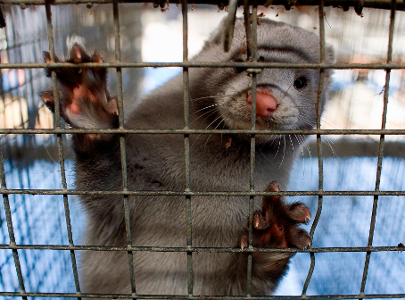
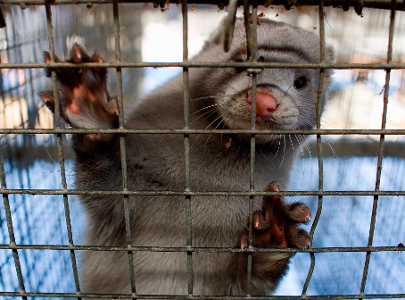
that fur farming has been modernized and isn't as cruel as it used to be. Many people believe that this isn't true, and that animals used by the fur trade are still treated badly. Reports show that over fifty million animals will be killed for their fur this year, and most of them will spend their short lives on fur farms before they're killed. Mink and foxes are kept in small cages, in crowded conditions, and they often feel very stressed. These animals can't live in cages because they're naturally wild. Moreover, in some countries in Asia, where domesticated animals such as cats and dogs are used to provide fur, there are no strict rules about how to look after animals, and they're often kept in terrible conditions.
4 So, what should be done? In some countries, like Britain and Austria, fur farming is banned, and in the EU and the USA, there are very strict controls on importing fur. Fur from cats and dogs is banned in the EU, for example. However, these laws haven't stopped the trade. Britain imports and sells more fur than ever before. As long as there are people who buy and wear fur, there will be companies who make a profit out of it.
5 Anti-fur campaigners are eager to encourage people who share their views to join them and spread their message. They use a variety of means to appeal to people who feel it's wrong to wear an animal's skin to support their campaigns. They educate young people about the fur trade by providing information showing the conditions that animals are kept in on farms, and by telling them which clothes shops in Europe continue to sell fur products. Their supporters can help by signing online petitions and handing out information either to people they know or to people on the street. Frequent demonstrations are held in major cities around the world where supporters keenly take up the fight. Anti-fur campaigners strongly believe that cruelty to animals can be stopped if people are educated about the issue and join together to support the campaign.
1This text is .
2It is written for .
3Its main purpose is .
the rise of the fur trade
It takes forty dumb animals to make a fur coat …
but only one to wear it.
1990s anti-fur slogan
In the 1990s, five of the world's most famous supermodels protested against wearing fur. Their campaign was so successful that most fashion-conscious people in Europe gave up their fur boots, coats and hats, and it became embarrassing to put on a fur coat in public. There were programmes on TV about how cruel the trade in animal skins was, and people who continued to wear fur in public were criticized or shouted at in the street.
Today, several decades later, the situation has changed. The fur trade is a powerful industry again, and global sales of fur are now worth over eight billion euros a year. In some European capitals, shops that sell products made from animal skins have reported a 50% increase in business. Supermodels have returned to promoting fur on the catwalk, and people in fur coats aren't shouted at in the street any more. It's cool to wear fur again. But why? Is it because the cruelty of the industry has been forgotten?
Many groups that campaign against the fur industry are reaching out to a new generation of young people who love fashionable clothes. This generation was too young to be aware of the campaign in the 1990s, and so the anti-fur groups are targeting them with their anti-fur trade message. A spokesperson for the fur industry was interviewed recently by a fashion magazine, and told a reporter
that fur farming has been modernized and isn't as cruel as it used to be. Many people believe that this isn't true, and that animals used by the fur trade are still treated badly. Reports show that over fifty million animals will be killed for their fur this year, and most of them will spend their short lives on fur farms before they're killed. Mink and foxes are kept in small cages, in crowded conditions, and they often feel very stressed. These animals can't live in cages because they're naturally wild. Moreover, in some countries in Asia, where domesticated animals such as cats and dogs are used to provide fur, there are no strict rules about how to look after animals, and they're often kept in terrible conditions.
So, what should be done? In some countries, like Britain and Austria, fur farming is banned, and in the EU and the USA, there are very strict controls on importing fur. Fur from cats and dogs is banned in the EU, for example. However, these laws haven't stopped the trade. Britain imports and sells more fur than ever before. As long as there are people who buy and wear fur, there will be companies who make a profit out of it.
Anti-fur campaigners are eager to encourage people who share their views to join them and spread their message. They use a variety of means to appeal to people who feel it's wrong to wear an animal's skin to support their campaigns. They educate young people about the fur trade by providing information showing the conditions that animals are kept in on farms, and by telling them which clothes shops in Europe continue to sell fur products. Their supporters can help by signing online petitions and handing out information either to people they know or to people on the street. Frequent demonstrations are held in major cities around the world where supporters keenly take up the fight. Anti-fur campaigners strongly believe that cruelty to animals can be stopped if people are educated about the issue and join together to support the campaign.
AAnimals are still treated badly by companies in the fur industry.
BNowadays, in the clothes stores and on the catwalks of Europe, fur clothes are growing in popularity.
CAlthough farming or importing fur is prohibited by many countries, the fur trade continues to be successful.
DThe anti-fur campaign groups want the governments of countries in Asia to stop the fur trade by introducing stricter rules.
ESeveral decades ago, people in the fashion industry were responsible for making fur clothes very unpopular.
FAnti-fur campaigners ask young people to take action to support their campaign.
GA representative of companies that buy and sell furs argued that fur farming has never been cruel.
the rise of the fur trade
It takes forty dumb animals to make a fur coat …
but only one to wear it.
1990s anti-fur slogan
1 In the 1990s, five of the world's most famous supermodels protested against wearing fur. Their campaign was so successful that most fashion-conscious people in Europe gave up their fur boots, coats and hats, and it became embarrassing to put on a fur coat in public. There were programmes on TV about how cruel the trade in animal skins was, and people who continued to wear fur in public were criticized or shouted at in the street.
2 Today, several decades later, the situation has changed. The fur trade is a powerful industry again, and global sales of fur are now worth over eight billion euros a year. In some European capitals, shops that sell products made from animal skins have reported a 50% increase in business. Supermodels have returned to promoting fur on the catwalk, and people in fur coats aren't shouted at in the street any more. It's cool to wear fur again. But why? Is it because the cruelty of the industry has been forgotten?
3 Many groups that campaign against the fur industry are reaching out to a new generation of young people who love fashionable clothes. This generation was too young to be aware of the campaign in the 1990s, and so the anti-fur groups are targeting them with their anti-fur trade message. A spokesperson for the fur industry was interviewed recently by a fashion magazine, and told a reporter
that fur farming has been modernized and isn't as cruel as it used to be. Many people believe that this isn't true, and that animals used by the fur trade are still treated badly. Reports show that over fifty million animals will be killed for their fur this year, and most of them will spend their short lives on fur farms before they're killed. Mink and foxes are kept in small cages, in crowded conditions, and they often feel very stressed. These animals can't live in cages because they're naturally wild. Moreover, in some countries in Asia, where domesticated animals such as cats and dogs are used to provide fur, there are no strict rules about how to look after animals, and they're often kept in terrible conditions.
4 So, what should be done? In some countries, like Britain and Austria, fur farming is banned, and in the EU and the USA, there are very strict controls on importing fur. Fur from cats and dogs is banned in the EU, for example. However, these laws haven't stopped the trade. Britain imports and sells more fur than ever before. As long as there are people who buy and wear fur, there will be companies who make a profit out of it.
5 Anti-fur campaigners are eager to encourage people who share their views to join them and spread their message. They use a variety of means to appeal to people who feel it's wrong to wear an animal's skin to support their campaigns. They educate young people about the fur trade by providing information showing the conditions that animals are kept in on farms, and by telling them which clothes shops in Europe continue to sell fur products. Their supporters can help by signing online petitions and handing out information either to people they know or to people on the street. Frequent demonstrations are held in major cities around the world where supporters keenly take up the fight. Anti-fur campaigners strongly believe that cruelty to animals can be stopped if people are educated about the issue and join together to support the campaign.
1 fashionable (clothes, place, person)
fashion-conscious (person)
avery interested in fashion
bfollowing a style that is popular at a particular time
2 give up
take up
astart doing something, or join something
bstop doing something
3 fur trade
fur farming
abuying and selling fur
bproducing fur from animals in cages
4 wild
domesticated
aliving in nature; not raised or grown by humans
braised or grown by humans; kept in a house or farm
5 reach out
hand out
aput in somebody’s hand
bask for help
- MOVE
- fashionable
- fashion-conscious
- give up
- take up
- fur trade
- fur farming
- wild
- domesticated
- reach out
- hand out
1We stood in the street all afternoon, leaflets to people as they walked past.
2 teenagers are always reading magazines or watching TV programmes about the latest styles. They want to know what's cool, and they want to wear clothes.
3We want to to young people who can help us.
4No one knows exactly when humans first started keeping dogs as pets. However, we know that they were the first animals.
5Jack has got a shop that sells coats made from foxes and mink. He works in the .
6We shouldn't keep animals like lions and tigers in zoos. It's cruel.
7After she saw a documentary on TV, Jenny the fight to stop the hunting of whales.
8I used to have a hat and a scarf made of fox fur, but I wearing them after I watched a documentary about fur farming.
|
7 CHALLENGE! Imagine you are involved in an international anti-fur campaign and you want to educate young people about the fur trade. Think of five reasons why young people should be against the fur industry. Speak for no longer than one minute. |
- Select Record Audio to record yourself.
- If you want to add a note to your teacher, write it in the Comments box.
- Select Submit to dropbox to send the recording to your teacher.
No comments:
Post a Comment