- MOVE
- How large and successful is the city today?
- When did people from Europe first arrive and start living on the island that became Nieuw Amsterdam?
- What were the names and jobs of the people who lived in the city of Nieuw Amsterdam?
- How did the first Europeans in Nieuw Amsterdam build their city?
- Who lived on the island before the Europeans arrived?
- When and why did Nieuw Amsterdam become an English city?

1
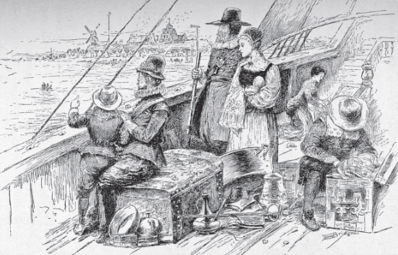
In 1625, settlers from Holland arrived on the southern coast of a long, narrow island off the east coast of North America. It was a beautiful island with thick forests full of wild animals, and deep rivers full of fish. There was a waterfall in the centre of the island, and in the north the settlers found a mountain with steep cliffs. There were long beaches with sand dunes along the coasts, and a deep harbour in the south where it was safe for their ships. It was the perfect place to build a new town.
2
The men from Holland weren't the first people on the island. Native Americans lived in a forest near the mountain in the north, and they called their island Manna-hata, which meant ‘island of many hills'. They were happy to see the unusual new visitors and didn't attack them. They wanted to meet them and buy things from them. The leader of the Dutch expedition met the Native Americans, and they agreed to sell the deserted south of the island to him. It wasn't expensive. It cost sixty Dutch guilders, which is only about twenty euros now!
3
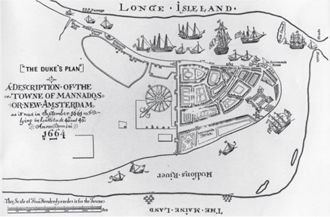
The settlers built a fort to protect the harbour. Then they started to build homes and shops. They constructed tall, narrow, wooden houses in the Dutch style. Next, they built churches, a theatre and government buildings. There were only about 300 people in the new town, but they all worked together and the town grew very quickly. In 1638, they built their first school, and a teacher came all the way from Holland to teach the children. The settlers designed very straight streets. The street that went through the centre of their city was very wide, so they called it Breede Weg, which means 'broad way' in Dutch. And, in the northern part of their town, they built a wall that was three metres high, and they called the street next to it Wall Street. The town was very small, but it was clean, tidy and well-built. And the people who lived there loved it. They called the new city Nieuw Amsterdam.
4
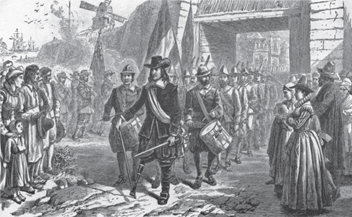
Then everything changed. There was a war between Holland and England, and Holland lost. In 1664, four English ships sailed into the harbour of Nieuw Amsterdam, and the town became an English city. Life in the small wooden town didn't change completely. The government changed and the English settlers began to build houses in the English style, but Dutch residents continued to live there. However, there was one thing that the English didn't like about the city – its name. They decided to change it. They decided to call the city New York.
1 ............................................................................
In 1625, settlers from Holland arrived on the southern coast of a long, narrow island off the east coast of North America. It was a beautiful island with thick forests full of wild animals, and deep rivers full of fish. There was a waterfall in the centre of the island, and in the north the settlers found a mountain with steep cliffs. There were long beaches with sand dunes along the coasts, and a deep harbour in the south where it was safe for their ships. It was the perfect place to build a new town.
2 ............................................................................
The men from Holland weren't the first people on the island. Native Americans lived in a forest near the mountain in the north, and they called their island Manna-hata, which meant ‘island of many hills'. They were happy to see the unusual new visitors and didn't attack them. They wanted to meet them and buy things from them. The leader of the Dutch expedition met the Native Americans, and they agreed to sell the deserted south of the island to him. It wasn't expensive. It cost sixty Dutch guilders, which is only about twenty euros now!
3 ............................................................................
The settlers built a fort to protect the harbour. Then they started to build homes and shops. They constructed tall, narrow, wooden houses in the Dutch style. Next, they built churches, a theatre and government buildings. There were only about 300 people in the new town, but they all worked together and the town grew very quickly. In 1638, they built their first school, and a teacher came all the way from Holland to teach the children. The settlers designed very straight streets. The street that went through the centre of their city was very wide, so they called it Breede Weg, which means 'broad way' in Dutch. And, in the northern part of their town, they built a wall that was three metres high, and they called the street next to it Wall Street. The town was very small, but it was clean, tidy and well-built. And the people who lived there loved it. They called the new city Nieuw Amsterdam.
4 ............................................................................
Then everything changed. There was a war between Holland and England, and Holland lost. In 1664, four English ships sailed into the harbour of Nieuw Amsterdam, and the town became an English city. Life in the small wooden town didn't change completely. The government changed and the English settlers began to build houses in the English style, but Dutch residents continued to live there. However, there was one thing that the English didn't like about the city – its name. They decided to change it. They decided to call the city New York.
1In 1625, Dutch ships arrived for the first time
2The Dutch discovered an island that
3When the Dutch arrived,
4The first buildings in Nieuw Amsterdam were
5In 1664, Nieuw Amsterdam became an English city when
6When Nieuw Amsterdam became English,
- MOVE
- settlers
- thick
- deep
- steep
- constructed
- wooden
- designed
- well-built
- residents
nouns that refer to people:
adjectives that describe buildings:
verbs used to talk about building houses:
adjectives that describe geographical features:
- MOVE
- settlers
- thick
- deep
- steep
- constructed
- wooden
- designed
- well-built
- residents
1a We got lost in the forest – the trees were very close together.
b The lake was so that you couldn't swim down to the bottom. It was a very long way.
c The hill was very . It was impossible to cycle up.
2a The architect a tall building with large windows. His plans were very good.
b The builders a garage next to our house. It took six months to finish the work.
3a In the forest, there was a house – they built it from trees.
b The house didn't fall down in the storm because it was very .
4a Polynesian arrived on the coast of New Zealand in the fourteenth century. They wanted to start a new life there.
b Today, New York is a very popular city. Many US would like to live in or near it.
|
5 Imagine that you are a seventeenth century explorer who discovered an island and started a new city. Prepare answers to the questions below, and write or tell the story of your discovery.
|
- Write your task in another program (e.g. Word).
- Save the file to your computer.
- Upload your file.
- If you want to add a note to your teacher, write it in the Comments box.
- Select Submit to Dropbox to send your work to your teacher.
No comments:
Post a Comment