
Imagine a school ...
Where kids have freedom to be themselves ...
Where you can play all day if you want to ...
And there is time and space to sit and dream ...
... could there be such a school?
If you travel about 140 kilometres north of London, to England's east coast, you'll find a very unusual school. It's a boarding school in a large nineteenth-century building, where children, teachers and other members of staff live, eat and study together. Its name is 'Summerhill'. There are about a hundred students at the school, aged between five and eighteen, and the school has its own library, theatre, sports hall and playing fields. What makes the school different, however, is the way it treats* its students. Summerhill is a free school. If you go there, you have the right to choose when you attend classes, the right to vote on school rules, and the right to take exams ..., but only if you want to. If you prefer going for a walk in the countryside instead of going to maths, that's OK. Nobody is going to punish you.
This may sound like a new and revolutionary idea for a school but, actually, Summerhill first opened in the 1920s and describes itself as the oldest and most famous free school in the world. Back in the 1920s, society believed that children were immature and irresponsible and that the only way to educate them was to be strict. Children had to wear uniforms, be silent and never ask questions. Schools regularly used corporal punishment when pupils broke the school rules, and there were so many rules that it was difficult not to get into trouble. In contrast, A. S. Neill, the man who started Summerhill, wanted a school where children were free to make their own decisions and to give their opinions. His philosophy was that if you're responsible for what you say and what you do, you'll make decisions that are good for you and for other

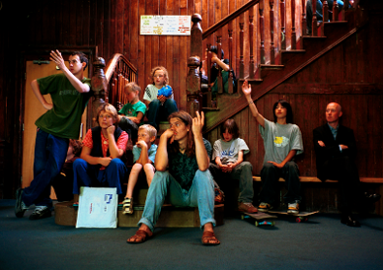
people. He believed that all crimes and all wars only happened because people were unhappy, so he created a school where students were free to be happy.
Nowadays, the rules in state secondary schools aren't as strict as they were a hundred years ago, but the pressure on students to work hard and do well is perhaps greater than before. In the future, there will probably be more tests and exams in state schools, but not at Summerhill. Students there will be free to discuss ideas, write stories, play games and act in plays. In this way, these young people will develop their imaginations and their personalities.
Interestingly, however, some things are going to change soon at Summerhill. A. S. Neill died in 1973, and his daughter, Zoë Neill Readhead, is the head teacher today. In a recent book, she wrote that the school is going to introduce more discipline because young people today are spoiled. Modern parents spend a lot of time with their children – they take them to interesting places, they organize things for them to do, and they buy them lots of presents. In Ms Readhead's opinion, this isn't always a good thing. When these young people get to Summerhill, they don't know how to do things by themselves, and they are too selfish to understand how other young people feel. They need to learn to be free from having their lives organized by adults. Summerhill continues to be a school that believes young people should live their own lives, not the lives that their parents and teachers think they should have.
Glossary
* to treat = to behave in a particular way towards someone or something
Imagine a school ...
Where kids have freedom to be themselves ...
Where you can play all day if you want to ...
And there is time and space to sit and dream ...
... could there be such a school?
If you travel about 140 kilometres north of London, to England's east coast, you'll find a very unusual school. It's a boarding school in a large nineteenth-century building, where children, teachers and other members of staff live, eat and study together. Its name is 'Summerhill'. There are about a hundred students at the school, aged between five and eighteen, and the school has its own library, theatre, sports hall and playing fields. What makes the school different, however, is the way it treats* its students. Summerhill is a free school. If you go there, you have the right to choose when you attend classes, the right to vote on school rules, and the right to take exams ..., but only if you want to. If you prefer going for a walk in the countryside instead of going to maths, that's OK. Nobody is going to punish you.
This may sound like a new and revolutionary idea for a school but, actually, Summerhill first opened in the 1920s and describes itself as the oldest and most famous free school in the world. Back in the 1920s, society believed that children were immature and irresponsible and that the only way to educate them was to be strict. Children had to wear uniforms, be silent and never ask questions. Schools regularly used corporal punishment when pupils broke the school rules, and there were so many rules that it was difficult not to get into trouble. In contrast, A. S. Neill, the man who started Summerhill, wanted a school where children were free to make their own decisions and to give their opinions. His philosophy was that if you're responsible for what you say and what you do, you'll make decisions that are good for you and for other
people. He believed that all crimes and all wars only happened because people were unhappy, so he created a school where students were free to be happy.
Nowadays, the rules in state secondary schools aren't as strict as they were a hundred years ago, but the pressure on students to work hard and do well is perhaps greater than before. In the future, there will probably be more tests and exams in state schools, but not at Summerhill. Students there will be free to discuss ideas, write stories, play games and act in plays. In this way, these young people will develop their imaginations and their personalities.
Interestingly, however, some things are going to change soon at Summerhill. A. S. Neill died in 1973, and his daughter, Zoë Neill Readhead, is the head teacher today. In a recent book, she wrote that the school is going to introduce more discipline because young people today are spoiled. Modern parents spend a lot of time with their children – they take them to interesting places, they organize things for them to do, and they buy them lots of presents. In Ms Readhead's opinion, this isn't always a good thing. When these young people get to Summerhill, they don't know how to do things by themselves, and they are too selfish to understand how other young people feel. They need to learn to be free from having their lives organized by adults. Summerhill continues to be a school that believes young people should live their own lives, not the lives that their parents and teachers think they should have.
Glossary
* to treat = to behave in a particular way towards someone or something
1Which of the following statements about Summerhill School is not true?
2According to the text, which one of the following 'rights' do children at Summerhill have?
3According to the text, what was typical about schools in the 1920s?
4In what way are modern state schools different from Summerhill today?
5What is going to change at Summerhill soon?
6What is the best way to describe the 'philosophy' of Summerhill School?
- MOVE
- strict
- attend
- vote
- boarding school
- state secondary schools
- corporal punishment
- staff
- spoiled
1a school where the students live and sleep
2the people who work in a school or an office
3schools for students aged between eleven and eighteen, which you don't have to pay for
4go to and be present at
5having very strong rules
6hitting people with something to punish them
7a word used to describe children who are not nice because their parents give them everything they want
8to show your view or opinion in a meeting or an election
- MOVE
- boarding school
- staff
- state secondary schools
- attend
- strict
- corporal punishment
- spoil
- vote
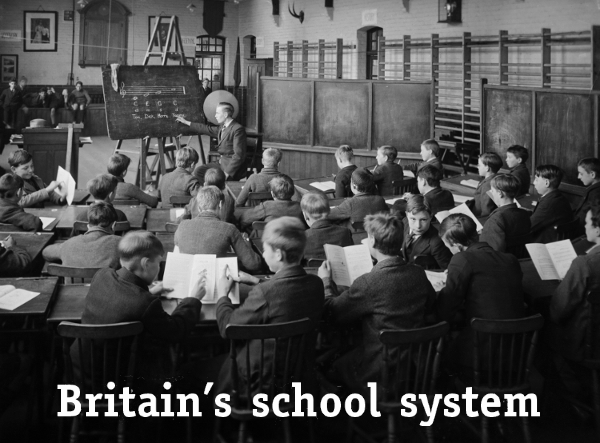
In 1918, the British government opened a lot of new
1
for children aged between eleven and fourteen. They were day schools, not
2,
and children had to
3
them for three years. At fourteen, they could get a job. Teachers and other
4
at the schools were very
5,
and the head teacher often used
6
when there was bad behaviour – he often hit the children. In 1944, politicians
7
for a new law – they raised the school leaving age to fifteen. Children in those days certainly weren't
8!
|
5 Your friend Sally is thinking about going to a new school. She has to decide between a state secondary school and Summerhill. Give her some advice about which school to choose and why. Speak for no longer than one minute. If you go to Summerhill, you'll ... , but you probably won't ... |
- Select Record Audio to record yourself.
- If you want to add a note to your teacher, write it in the Comments box.
- Select Submit to dropbox to send the recording to your teacher.
No comments:
Post a Comment